
Loading...
Serving Weatherford, TX and surrounding areas. (682) 412-8936
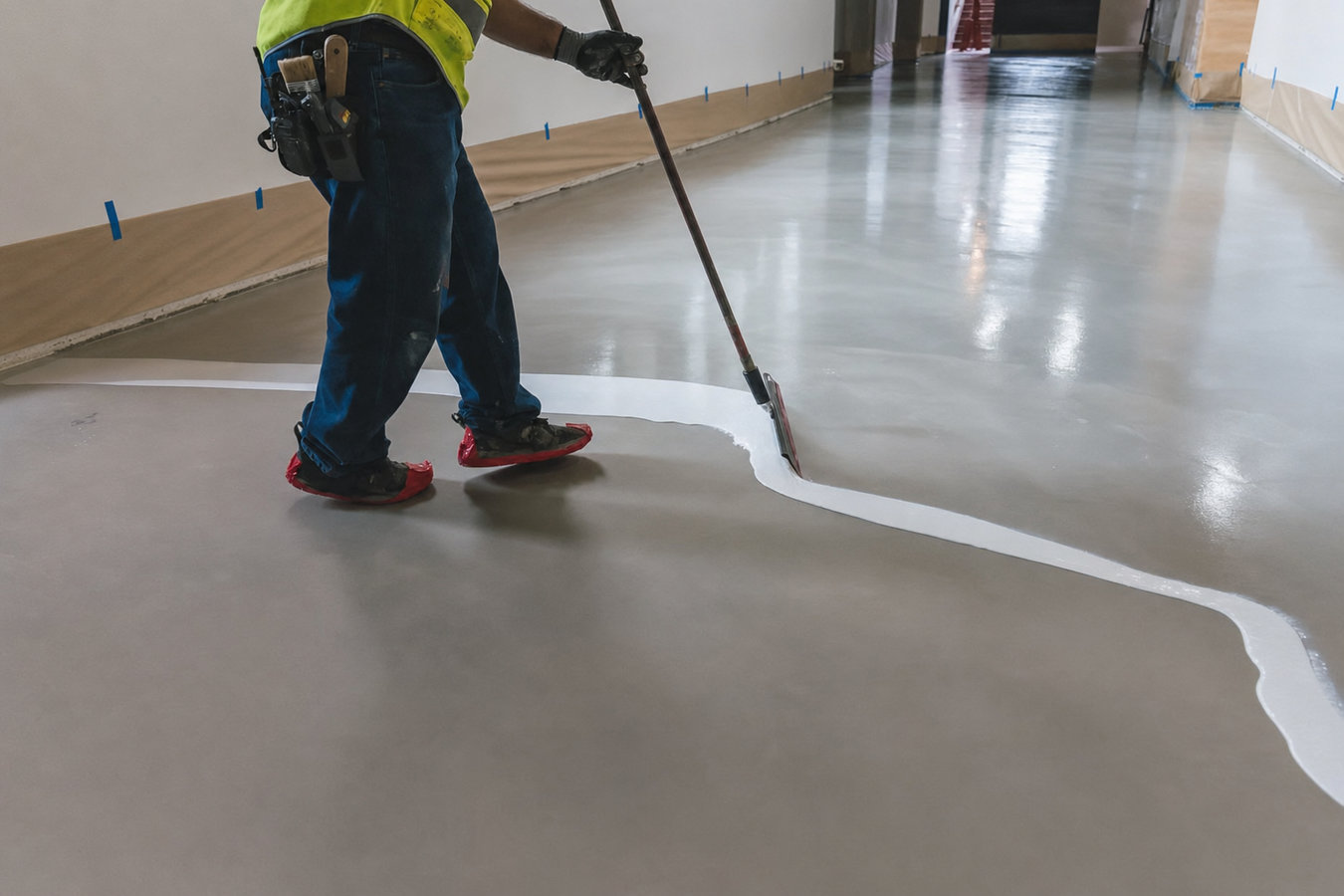
Dipping, uneven, or deteriorating concrete floors get a flat, finished surface with a bonded overlay - without the cost and disruption of ripping out the slab underneath.
Self-leveling concrete in Weatherford is a specially formulated material that flows across an uneven floor and settles into a smooth, flat surface on its own - most garage, basement, and patio projects take one to three days from prep through application, plus a curing window before the space can be used again.
It is used when your floor has dipped, shifted, or developed surface scaling from years of clay soil movement and temperature swings - conditions that are very common for Weatherford homeowners. Instead of tearing out the existing slab, a contractor grinds and cleans the surface, then pours a thin, self-leveling layer over it to create a flat, durable base. The result looks and performs like a new floor without the expense or mess of a full replacement.
If your floor needs a decorative finish on top of the leveled base, our concrete resurfacing and overlays service covers the full range of finish options - including stamped, tinted, and textured coats that can be applied once the level layer cures.
If water pools in one spot on your garage floor after rain, or furniture rocks slightly because the floor is not flat, your slab has likely shifted or settled unevenly. This is directly tied to Parker County's clay soil, which expands and contracts with the seasons. Self-leveling concrete fills those low spots and restores a flat surface without replacing the entire slab.
If sweeping your garage or basement floor produces a fine gray dust that keeps coming back, or the surface looks like it is peeling in small flakes, the top layer of concrete is breaking down. This is called scaling, and it is common in older Weatherford slabs exposed to years of temperature swings and moisture cycles. An overlay over a properly prepared surface gives you a fresh, durable floor.
Hairline and minor surface cracks that have been stable for a year or more are not necessarily structural - but they make a floor look worn and collect dirt and moisture. If the cracks are not actively growing or shifting, an overlay is often a practical and cost-effective way to restore the appearance and protect the surface going forward.
Damp spots appearing on your garage or basement floor after a significant rain - especially in spring - mean moisture is moving up through the slab from the ground below. Left unaddressed, this will damage any flooring placed on top. A concrete contractor can test for this and apply a moisture-blocking primer before the overlay, stopping the problem rather than covering it up.
Every project starts with a moisture test and a thorough assessment of the existing slab - because an overlay applied over active moisture or an unstable crack will fail regardless of how good the material is. Once the surface is confirmed ready, we grind or shot-blast the concrete to open up the profile, fill any cracks or problem areas, and then pour the self-leveling material to bring the floor back to flat. For homeowners who also want a decorative finish, we can follow that base layer with a concrete resurfacing overlay once the self-leveling layer cures.
For finished living spaces, covered patios, and garage conversions, a decorative overlay coat on top of the leveled base can transform a rough concrete floor into something that looks like tile or stone at a fraction of the installation cost. We also handle pool deck overlays where slip resistance and UV resistance are the priority rather than aesthetics alone. A protective sealer goes on every finished surface to guard against moisture, staining, and daily wear.
Best for floors with minor unevenness or low spots where a thin, flat base layer restores level without building up significant height.
Suited for floors with noticeable dips or humps that need more material to correct - commonly used on garage and basement slabs with significant clay soil movement.
For homeowners converting a garage, finishing a basement, or upgrading a patio who want a smooth, visually finished surface over the leveled base.
The right choice when testing shows active moisture moving through the slab - primer stops the moisture, and the overlay goes on top for a durable, dry surface.
Weatherford sits in Parker County on Blackland Prairie-adjacent clay soil that swells when it gets wet and shrinks when it dries. That constant movement from underneath is the primary reason garage and basement floors in this area develop dips, humps, and surface cracks - often on slabs that are otherwise structurally sound. Many homes built in the 1970s through 1990s in established neighborhoods have floors that have been through decades of that seasonal cycle, which makes them strong candidates for self-leveling overlays rather than costly full replacements. Homeowners in Hudson Oaks and Willow Park face the same soil conditions, and we work in both communities regularly.
Weatherford's seasonal humidity swings add another layer of complexity - slabs that seem perfectly dry in August may have active moisture moving through them in April after spring rains. A contractor who does not test for moisture before applying an overlay is skipping the most important diagnostic step. We test every slab before work begins, and if moisture is present, we apply a barrier primer before the overlay goes down. The International Concrete Repair Institute publishes surface preparation guidelines that describe exactly why this step matters for overlay longevity.
We respond within one business day. Let us know what type of space you are working with, roughly how large it is, and what you are seeing - dips, cracks, flaking, or moisture. We schedule an in-person visit because no legitimate estimate can be given without seeing the floor.
We walk the space, check for active cracks or movement, and test for moisture before recommending anything. You receive a written estimate covering the scope, the finish options, the timeline, and the cost - so you can compare it with other quotes and ask questions without pressure.
The crew grinds or mechanically cleans the existing concrete to remove any loose material, old coatings, or contamination. This is noisy and produces dust. It is also the phase that determines whether the overlay bonds tightly and lasts - a crew that rushes it is setting the project up to fail.
The self-leveling material is poured and spread with a gauge rake. Once cured - typically 24 hours for foot traffic, three to seven days for full use - a sealer is applied. Before the crew leaves, we walk the space with you and cover care instructions, including how long to wait before placing rugs or parking a vehicle.
Free estimate, written quote, no obligation. We will test the slab and tell you exactly what it needs before any work begins.
(682) 412-8936Moisture moving up through a slab is the most common reason overlays fail - and it is entirely preventable with a test and the right primer. We test every floor before we apply anything. Contractors who skip this step are handing you a surface that may peel or bubble within months.
Parker County's shrink-swell soil is the main driver behind uneven and cracked floors in Weatherford and the surrounding communities. We factor that soil behavior into how we assess whether a slab has stabilized and what products are appropriate for the long-term local conditions - not just what looks good on day one.
Weatherford's summer heat causes self-leveling materials to dry too fast if applied in direct sun or an unconditioned space, which leads to cracking. We schedule these projects for the spring and fall windows and plan early-morning applications when summer work is unavoidable. The Portland Cement Association outlines concrete curing requirements that back up this approach.
You receive a written breakdown before we touch the floor - covering the prep process, the material, the finish, the timeline, and the total cost. The estimate is yours to compare with other quotes. There are no additions after the job starts unless you specifically request a change.
The combination of moisture testing, clay soil awareness, and weather-appropriate scheduling is what separates a self-leveling overlay that holds for years from one that looks fine for three months and then fails. Weatherford homeowners who have used us know they can call after the job is done and someone will answer.
Slip-resistant, UV-rated overlays for pool surrounds and outdoor entertaining areas - purpose-built for Weatherford's heat and heavy spring rains.
Learn MoreDecorative and plain overlay finishes for driveways, patios, and garage floors - applied over a leveled, prepared surface for a lasting result.
Learn MoreFall booking slots fill fast - call today or use the contact form and we will respond within one business day.